Taming Common Mode RFI: Two Homebrew Ferrite Transformers
10/08/2026
If you've ever run an End-Fed Half-Wave (EFHW) antenna close to a house, you've probably met its evil twin: common mode current. My EFHW comes with a 49:1 transformer, and while it's a great antenna for tight spaces, it has a well-earned reputation for pushing RF current back down the outside of the coax shield — straight into the house. In my case, that meant misbehaving home automation (domotica) equipment: lights flickering, touch switches locking up, and general chaos on 40m in particular.
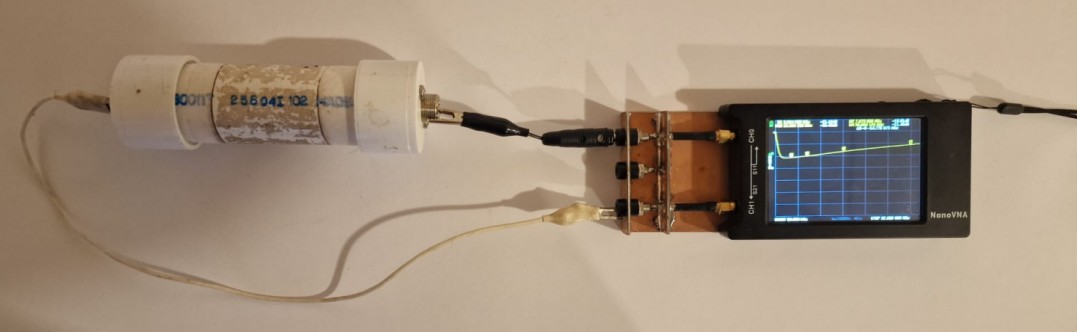
| Frequency | Attenuation |
|---|---|
| 3.564 MHz | -21.12 dB |
| 7.079 MHz | -19.91 dB |
| 15.226 MHz | -16.43 dB |
| 30.00 MHz | -11.48 dB |
I started out with a common mode choke given to me by ON6YN. It's rated for very high power, which is great, but the attenuation it offers is on the modest side. That's plenty for the everyday asymmetry of a plain dipole, but an EFHW is a different animal: by nature it's a wildly asymmetric antenna, and it needs a lot more common mode suppression to keep the coax from turning into part of the radiator. So after a lot of measuring, troubleshooting, and more than a few false leads, I decided to build something with real, known performance rather than lean on a choke whose specs I could only guess at.
The build
Both transformers are built around an FT-240-31 ferrite toroid, a solid choice for the 3.5–30 MHz range, where mix 31 offers good impedance.
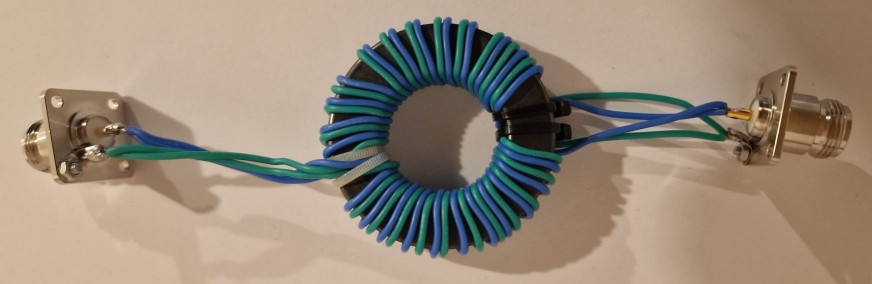
Winding-wise, I went with:
- 12 bifilar windings: two 12-turn windings running in parallel on the core, wound side by side (left/right) rather than twisted
- AWG18 silicone wire: chosen for its flexibility and heat resistance, which makes winding a toroid this size a lot less painful
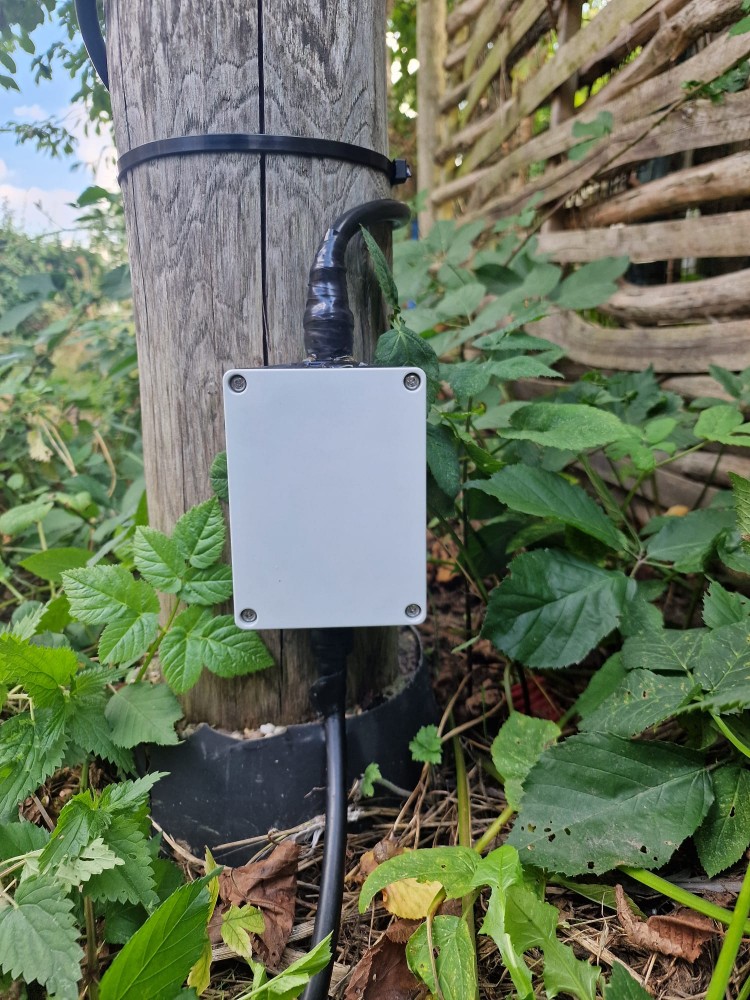
Each finished transformer went into a weatherproof enclosure with N connectors, so they can be mounted outdoors without worrying about the Belgian weather getting into the electronics.
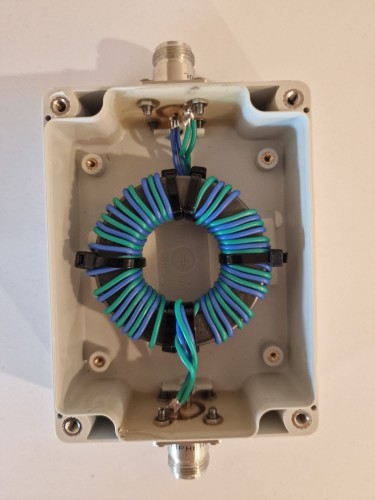
I built two of these:
- One outdoors, right at the antenna itself. Ahead of this transformer runs about 6 meters of coax that also serves as a counterpoise for the EFHW.
- One where the feedline enters the house, acting as a second line of defense before the RF has a chance to get anywhere near the domotica wiring.
Measured performance
Before trusting these in the field, I measured them on a nanoVNA-based test jig I built specifically for common mode measurements. The results were satisfying:
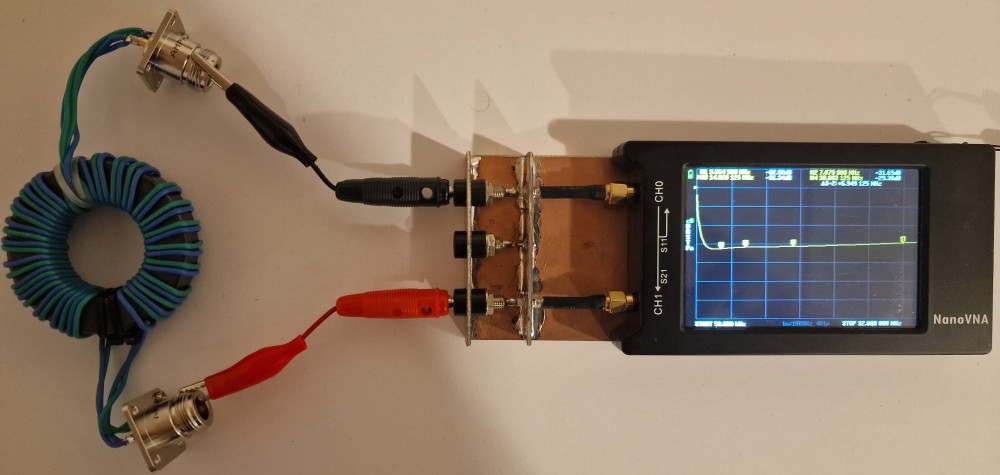
~30 dB of common mode attenuation:
| Frequency | Attenuation |
|---|---|
| 3.564 MHz | -32.52 dB |
| 7.079 MHz | -31.68 dB |
| 15.226 MHz | -31.34 dB |
| 30.00 MHz | -29.38 dB |
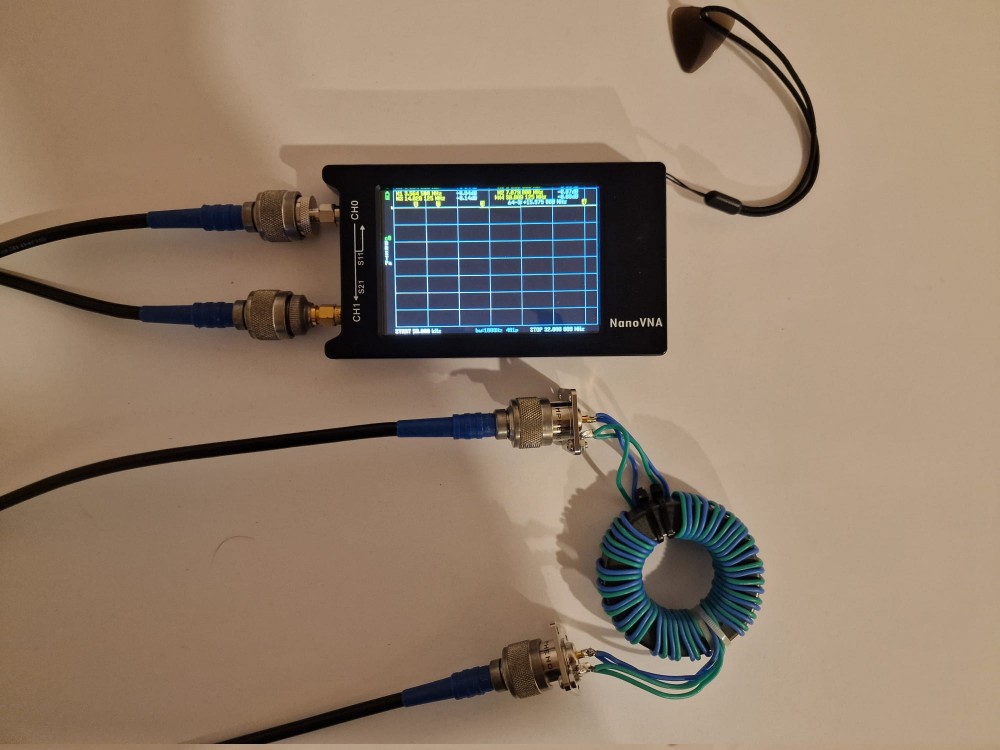
0.13 dB dB insertion loss at 15m band:
| Frequency | Attenuation |
|---|---|
| 3.564 MHz | -0.04 dB |
| 7.079 MHz | -0.07 dB |
| 15.226 MHz | -0.13 dB |
| 30.00 MHz | -0.08 dB |
For a homebrew build on a single FT-240-31 core, I'm happy with that.
Did it work?
Partially, and that "partially" is the interesting part.
On receive, the improvement is very noticeable. The noise floor dropped significantly; the band is simply quieter now that common mode current isn't being picked back up by everything metallic in the house.
Inside my own house, the domotica interference improved but isn't fully gone. Two ferrite transformers in the feedline clearly help, but they're not a complete fix on their own. RFI at these power levels rarely has just one culprit, and I'm continuing to chase down the remaining coupling path.
At the neighbor's house, I saw essentially no improvement at all. That result actually tells me something useful: since choking the feedline had no effect there, the coupling into their domotica installation almost certainly isn't happening via common mode current on my coax. It's more likely direct radiation from the antenna wire itself into their equipment. That's a separate problem with a separate solution, and it's redirected my troubleshooting efforts accordingly.
Takeaways
- A well-built choke on FT-240-31 with silicone wire is a solid, repeatable design, 30 dB of attenuation with negligible insertion loss isn't hard to achieve if you wind it carefully and measure it properly.
- Always sanity-check your test jig calibration before trusting a "bad" measurement — my first insertion loss number would have sent me down the wrong path entirely.
- Common mode chokes fix common mode problems. If the interference doesn't budge after choking the feedline, it's a strong hint that you're dealing with direct/radiated coupling instead. Which is exactly what seems to be happening at my neighbor's place.
The investigation continues. Next up: characterizing the direct coupling path and figuring out whether it's fixable from the antenna side, or whether the real fix has to happen at the domotica installation itself.
73, ON4DMD
Comments